


The question comes up often. And the answer is less a matter of belief than of goal.
What Happens in the Body
Cold water triggers an immediate reaction: the blood vessels contract, the heartbeat slows down, the body focuses energy on its core functions. Afterwards, when you step out of the water, the opposite happens, the vessels dilate again, circulation rises, the head is clear.
This mechanism is decisive, depending on when you use it you achieve different effects.
Ice Bath Before Training: Mental Activation, Not a Replacement for Warming Up
An ice bath before training is not a classic warm-up. Physiologically speaking cold cools the musculature, which can briefly affect explosive strength and power output. It is not suited as a replacement for a proper warm-up.
What it does achieve:
- Mental sharpness. You enter the session concentrated and alert.
- Stress resistance. Those who overcome the initial shock of cold water bring a different attitude into the exertion.
- Activation of the nervous system. Many athletes report a clear, focused state directly after the bath.
Particularly suited before: technical sessions, mental preparation, moderate training loads, competition days with a lot of pressure.
Not recommended before: maximum strength training, heavy sprints, or when muscle warmth is decisive.
Ice Bath After Training: Recovery as a System
This is where the real strength of cold therapy lies.
After intense exertion muscle tissue is micro-traumatised. The body responds with inflammatory processes, this is a natural part of adaptation. An ice bath after training supports the regulation of this reaction without completely suppressing it.
What athletes and active people specifically report:
- less muscle soreness in the 24 to 48 hours afterwards
- faster feeling of recovery between sessions
- better sleep on the night after training
- mental letting go after hard sessions
Particularly effective after: endurance training, team sport, long running sessions, intense strength training.
Timing: 10 to 30 minutes after exertion, 8 to 14 degrees Celsius, 3 to 10 minutes duration, depending on experience and goal.
An Exception: Strength and Muscle Building
Those who primarily want to build strength or muscle mass should not make the ice bath directly after strength training a daily habit. Some studies indicate that immediate cooling after heavy strength training can dampen anabolic signalling pathways such as mTOR.
This does not mean that cold therapy and muscle building are mutually exclusive. It means: timing is relevant. Those who do strength training and want to use cold can place the bath in the early morning or on a rest day.
Summary
Before training
Mental activation, focus, nervous system
After training
Recovery, less muscle soreness, better sleep
With strength building
Maintain a time gap from heavy training
The Right Tool Decides
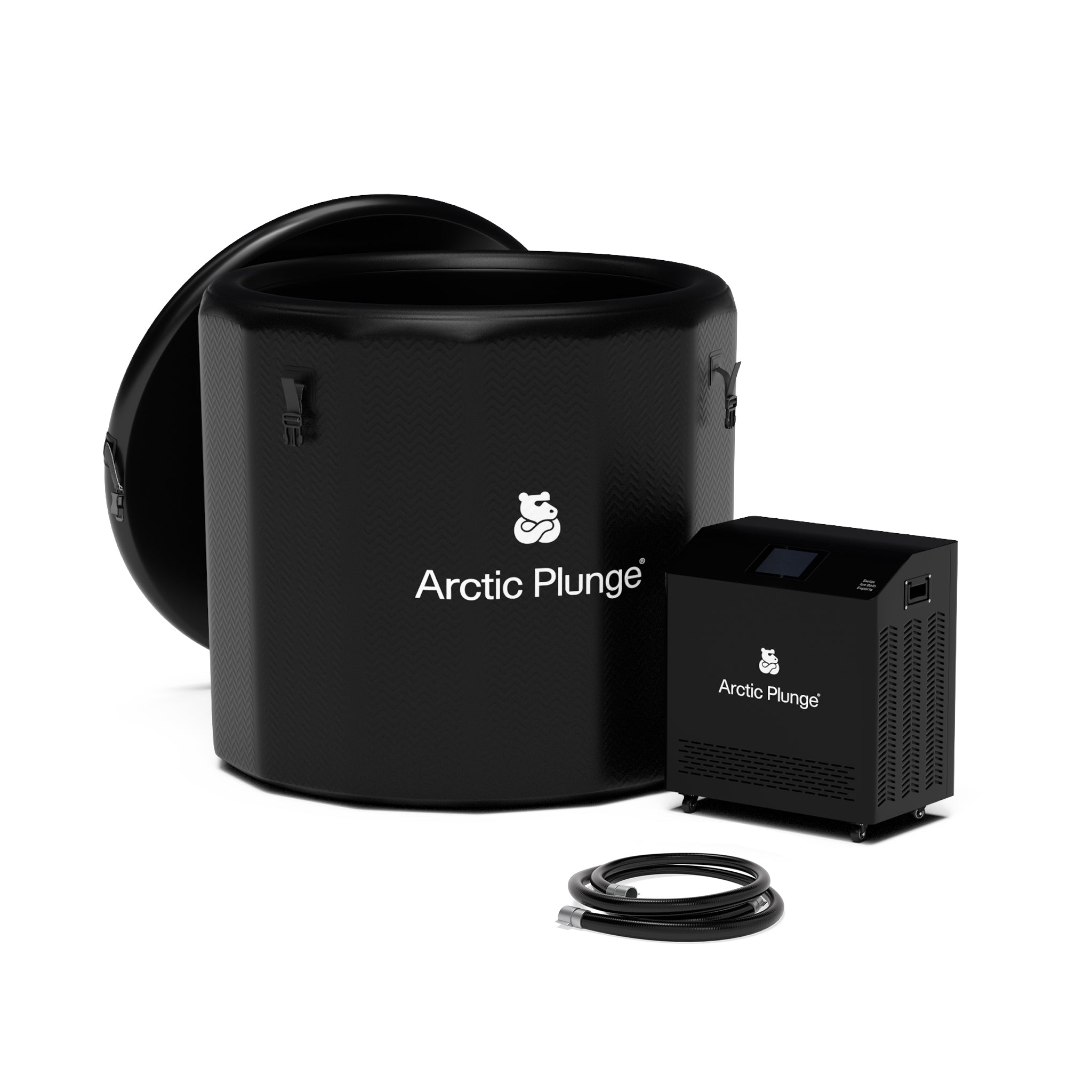
An ice bath should not be a random thing. Those who use it deliberately notice the difference. The Arctic Plunge Wasserkühler PRO delivers a constant, stable temperature, more powerful and efficient than many comparable devices and designed for daily home use, so you no longer have to weigh availability against effectiveness.
Cold works. The only question is: when.
This post was created by the Arctic Plunge team, a Swiss brand for modern ice baths and cold therapy systems.


